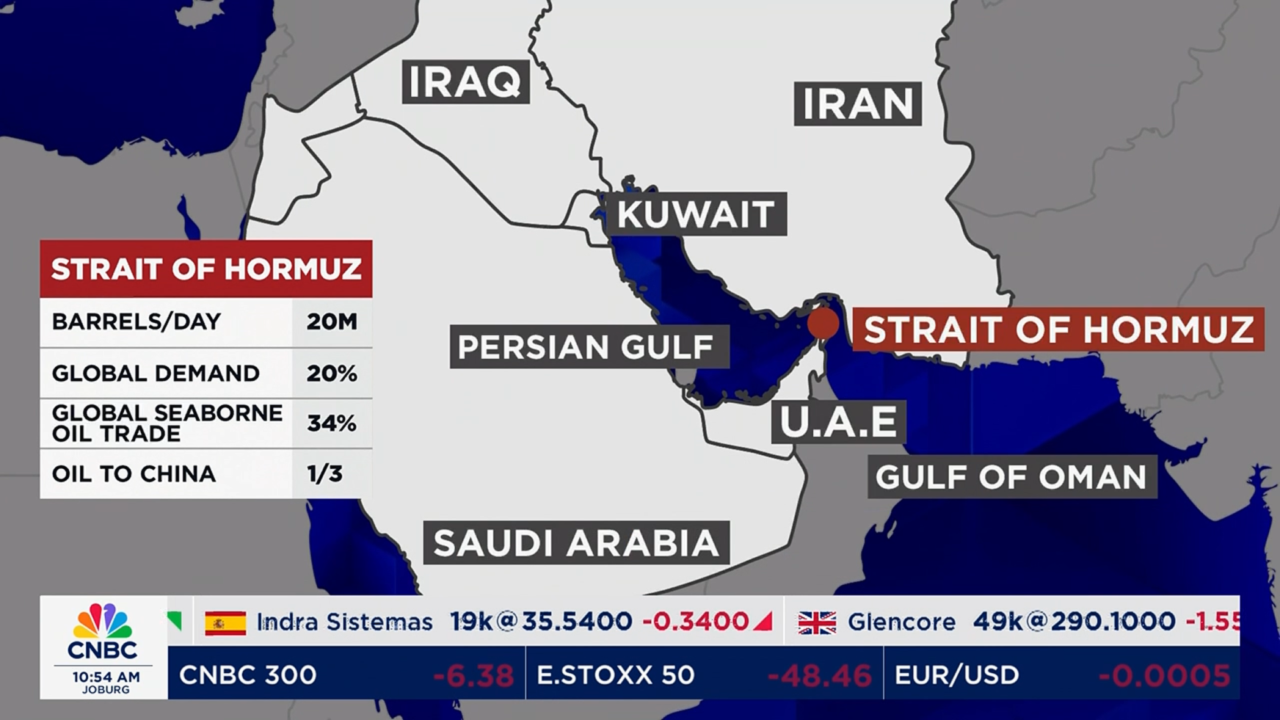
The human and economic impact of U.S. attack on Iran cannot be understated. The ensuing ripples to the global economy cannot be ignored.
The Strait of Hormuz is not just an oil artery but a global switch board.
As we now enter mid-March, the prospect of a few weeks of “surgical strikes” has evaporated. If the region remains under constant drone and missile threat for months, or if a US ground invasion begins, we are no longer looking at a market “dip”, we are looking at a structural re-valuation of the global economy.
Under such conditions, we must remain optimistic but be prepared for the worst. As a professional investor focused on AI and tech investments, I’ve been watching the gulf conflict very closely. Raising cash levels and tightening our risk parameters. Preparing our portfolio to weather the storm, as well as being ready to capitalise on any short-term price swings.
I have no concern about the long-term growth prospects of AI technology and infrastructure. This is once in generation industrial revolution that could possibly slow down but will impossible to derail.
Here are three things I continue to monitor:
1. Shutdown of the Strait of Hormuz
The impact of the Strait of Hormuz shut down goes beyond petroleum and natural gas. Few realise the impact it could have on tech valuations which are built on the assumption of infinite growth and seamless supply of raw materials. A continued shutdown of the strait beyond another few weeks will shatter that premise.
Qatar produces over one third of the world’s helium. High-end chip foundries in Taiwan and South Korea rely on this gas for the lithography and cooling processes that make AI chips possible. Unlike oil, you cannot simply “drill more” helium in Texas to fix the shortfall.
AI sector and the overall stock market in the U.S. is currently trading at historically high multiples. A month or two manufacturing halt doesn’t just delay revenue, it forces investors to bake a “geopolitical risk premium” into every future cash flow.
2. Ground Invasion and the “Forever Threat”
If the US moves beyond airstrikes to a ground invasion, the security bubble around Middle Eastern energy and chemical hubs will become more difficult to sustain.
Cheap drones and mobile missile launchers can continue to harass shipping for months, even if all major launch sites are destroyed. This keeps insurance premiums for cargo vessels at prohibitive, “uninsurable” levels.
Plus, the gulf region account for 34% of global urea and 23% of ammonia trade. Urea prices have already jumped 30% to over $585 per metric ton since the conflict began. A prolonged ground war through the spring planting season means lower crop yields in Brazil and India, translating to empty grocery shelves by Q3 2026.
3. Stagflation Risks in Asia
As a student of economics, stagflation was always the bogeyman in the economic room.
Stagflation occurs when a stagnant economy, characterized by slow growth, collides with high inflation. In a healthy market, these two forces move in opposite directions. However, a prolonged war creates a “no-win” scenario where the cost-of-living surges due to $100+ oil and expensive food, while the job market stops growing and business investment goes flat.
This is particularly dangerous because the traditional tools used by central banks become useless. If they raise interest rates to fight inflation caused by the war, they risk crashing an already weak economy.
For businesses, it’s a brutal double whammy as costs rise and demand declines at the same time. Causing company profit margins to shrink, revenues to decline, and profits elusive.
Risks of stagflation for North America are not immediate but for South Asian economies the risk is real. With every week the Strait of Hormuz remains closed keeping oil prices elevated, and supply chains disrupted, South Asia and Far East inch closer to stagflation due their high reliance on the energy imports from the gulf.
Bottom Line: Being Prepared
We are discovering, painfully, that our most advanced technologies and our basic food supplies are not immune to the war. The risk is not imminent but real.
Whether you are an investor, a business owner, or a head of a household, the reality of an era of predictable stability has shifted. Every person must now prepare for a certain period of economic uncertainty, one defined by resource scarcity, volatile energy prices, and a fundamental re-ordering of global trade.
Beyond the balance sheets and the stock tickers, there is a real human cost that no spreadsheet can capture. We must remember that behind every supply chain disruption is a region in turmoil and millions of innocent families caught in the crossfire.
Praying for a swift de-escalation, the safety of all those in the region, and for a lasting peace that allows the world to build rather than break.