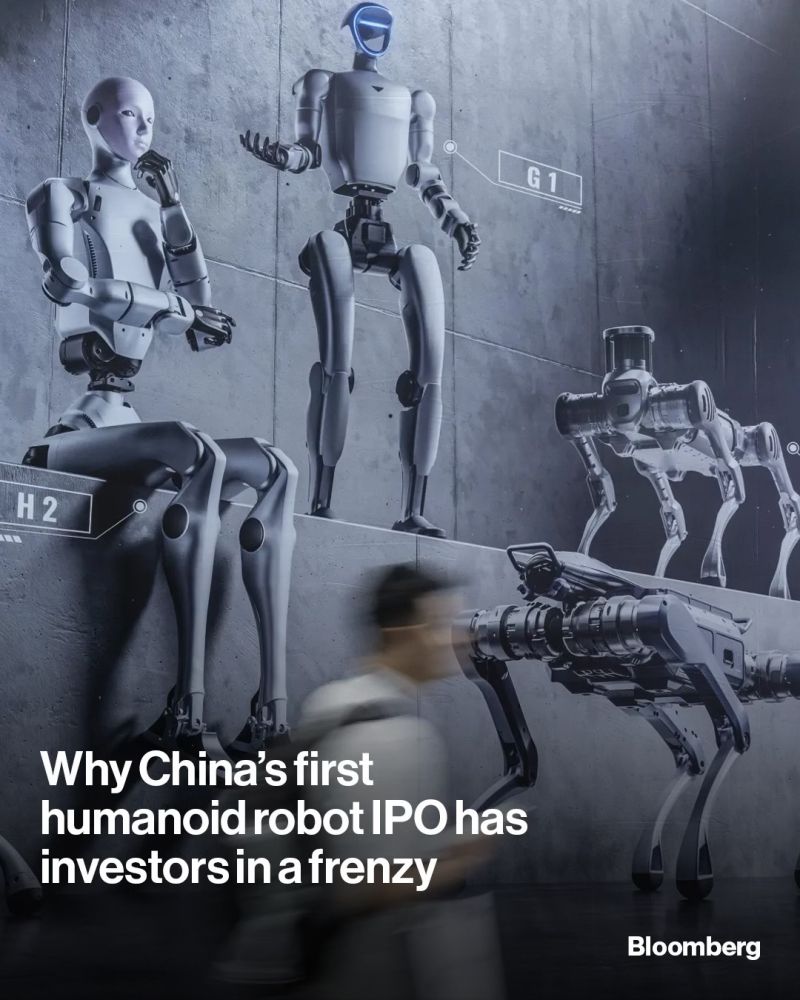
In 2025, Unitree shipped 5,500 humanoid robots, generating $246 million in revenue, up 335% year over year, and operates with positive net income.
For perspective, Figure Al carries a private valuation of $39 billion on minimal revenue.
Unitree came to the public market with real sales volume, solid profit, and a valuation of under $10 billion.
Pricing explains the excitement.
Standard humanoid robots cost between $50,000 and $130,000. Unitree sells its G1 humanoid for $13,500!
Its newer R1 model starts at $4,900. Nothing comparable exists at that price level anywhere in the world.
That cost advantage helped Unitree capture roughly 32% of the global humanoid market and 70% of the four legged robot market.
Their primary advantage is vertical integration. Unitree builds more than 90% of its components in house, including motors, reducers, controllers, sensors, and software.
These machines are not research experiments. They are actively deployed by major industrial clients such as PetroChina, Sinopec, State Grid, and China Mobile.
Robots are moving fast from industrial facilities into consumer market. Soon they could be preparing your dinner or watching the kids while you work.
The real question is, would you trust a robot in your home?